A short and entirely reasonable case for 56.11° N, 3.16° W

Kirkcaldy.

Fife’s Lang Toun, and officially the happiest place to live in Scotland. Here’s the evidence.

About four minutes to read

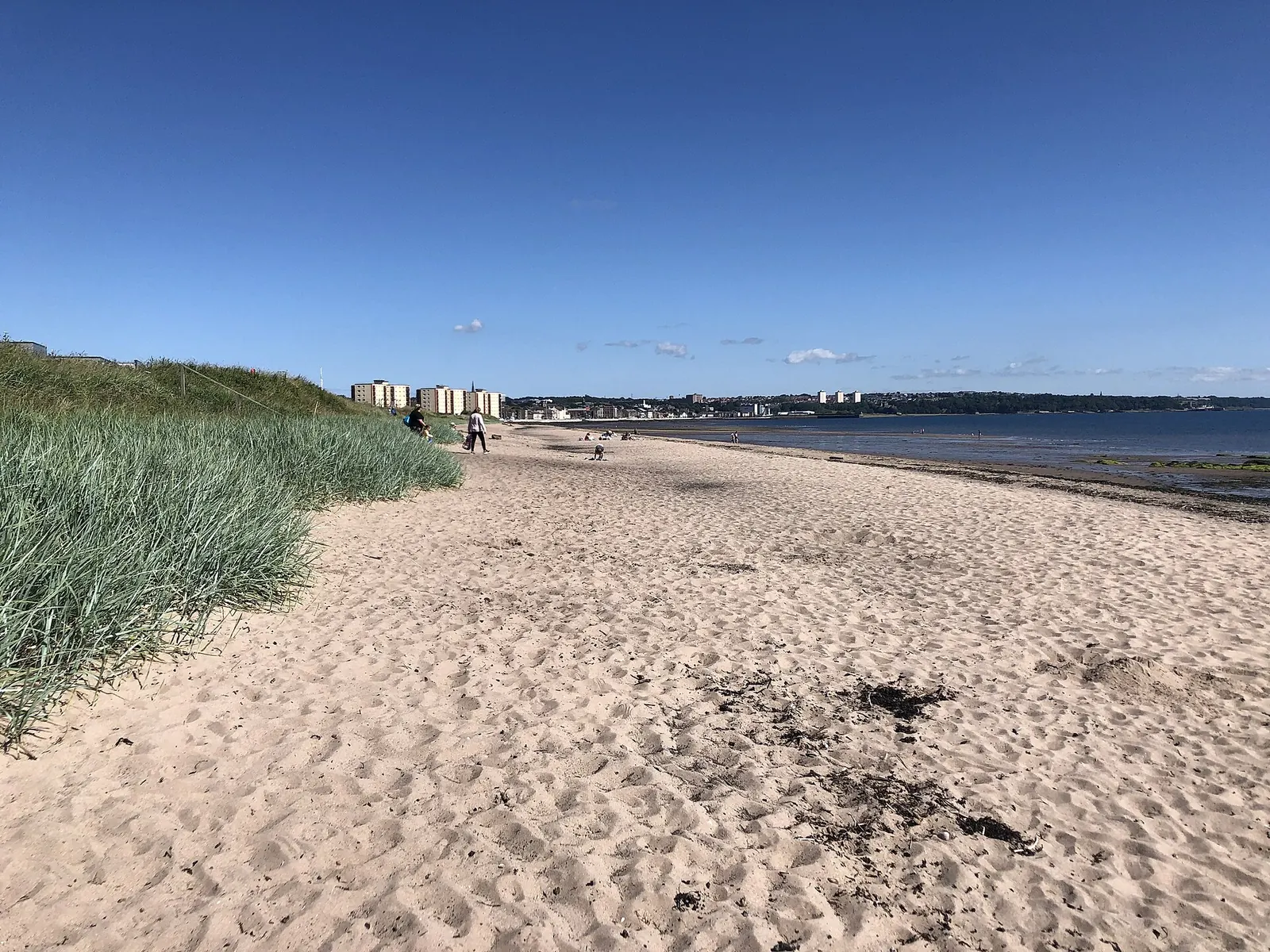
Seafield beach on a bright day: pale sand and marram grass sweep towards the Kirkcaldy skyline across the bay.
Seafield beach, looking back along the bay to the town. Photo: Bill Kasman, CC BY-SA 2.0
  • Happiest place to live in Scotland
  • Birthplace of Adam Smith
  • Europe’s longest street fair
  • The football club that got shipwrecked
  • Seven-time Pokémon Stadium 2 champion
  • Borscht available
  • Stovies, if you must
01 — The table

Top of the league.

Every year Rightmove surveys people right across Great Britain about how happy they are where they live. In 2026 Kirkcaldy came top in Scotland, and 18th in the whole of Great Britain.

Edinburgh came eighth in Scotland. Glasgow came twelfth. We’ll just leave that there.

Happiest places to live in Scotland, 2026
Pos Place GB rank
1Kirkcaldy obviously18
2Perth39
3Inverness40
4Dundee43
5Galashiels47
6Stirling52
7Aberdeen72
8Edinburgh the capital77
9Motherwell94
10Falkirk103
11Ayr116
12Glasgow dear green place117
13Kilmarnock135
14Paisley156
15Dumfries161

Source: Rightmove Happy at Home Index 2026. Scottish places only; GB rank is out of every place surveyed in Great Britain.

02 — The case

Three things other towns would kill for.

They call it the Lang Toun because the old main street ran for the best part of a mile along the shore. There’s a lot packed into it.

  1. It gave the world economics

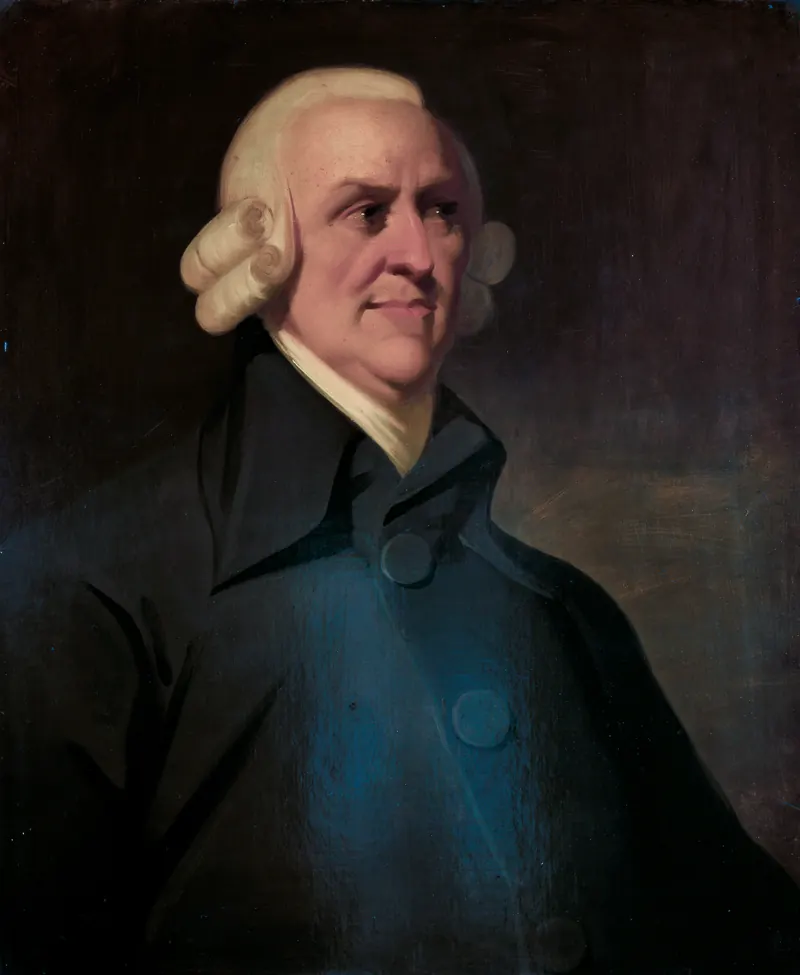
    Adam Smith was born here in 1723. In 1767 he came home and spent most of the next six years at his mother’s house on the High Street, writing The Wealth of Nations. It was published in 1776 and more or less invented the subject. He ended up on the £20 note.

    Eighteenth-century oil portrait of Adam Smith in a powdered wig and dark coat.
    Adam Smith, the “Muir portrait”.Artist unknown, public domain
  2. Europe’s longest street fair

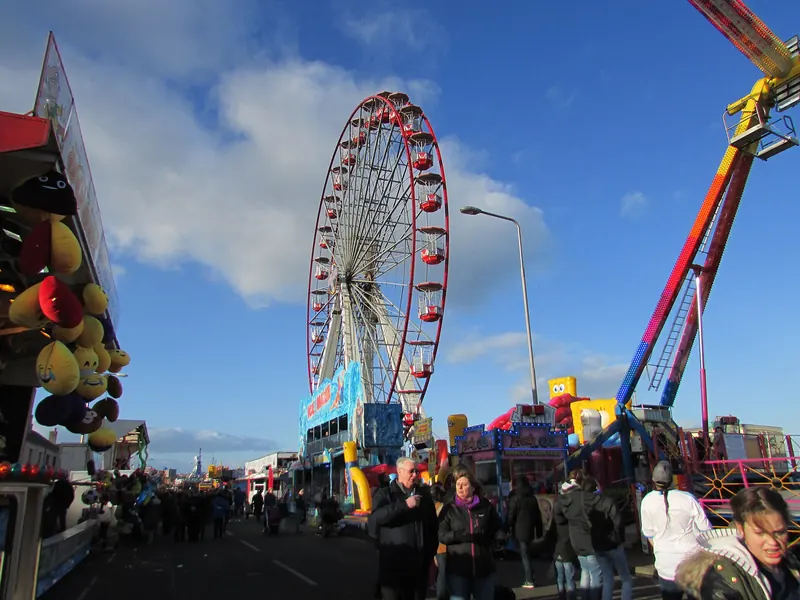
    Every April the Links Market takes over nearly a mile of the Esplanade with waltzers, ghost trains and doughnut vans. It traces its roots to 1304 and is widely billed as the longest street fair in Europe.

    Crowds on the Esplanade during the Links Market, beneath a big red Ferris wheel and a blue sky.
    The Links Market on the Esplanade.Photo: Bill Kasman, CC BY-SA 2.0
  3. The best football story in Scotland

    In November 1994 Raith Rovers beat Celtic on penalties at Ibrox to win the Scottish League Cup. The next season they went to Munich in the UEFA Cup and were beating Bayern at half-time.

    Even that isn’t their best story. In 1923 the team was shipwrecked off Spain on the way to a tour of the Canary Islands. Everyone got ashore, and they played the tour anyway.

Also from round here
  • Robert AdamBorn here in 1728. One of the great architects of Georgian Britain.
  • Marjory FlemingBorn here in 1803. A child diarist so sharp that Mark Twain wrote an essay about her.
  • Val McDermidBorn here in 1955. Queen of Tartan Noir and a devoted Raith Rovers fan.
  • Gordon BrownGrew up here, then became Prime Minister. Also a Raith fan.
  • Fife FlyersFounded in 1938 and billed as Britain’s oldest ice hockey club.
03 — Dispatches

Local legends.

Not every great Kirkcaldy story makes the papers. These three came to us direct, and we’ve printed them as they were told.

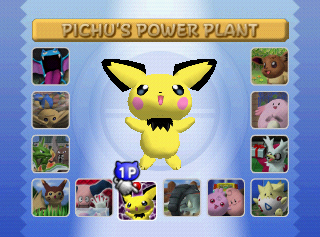
Pokémon Stadium 2 minigame select screen, with Pichu’s Power Plant highlighted and Pichu in the centre.
The arena. Pokémon Stadium 2, Nintendo 64. © Nintendo / Creatures Inc. / GAME FREAK inc.

The twelve disciplines

  • Gutsy Golbat
  • Topsy-Turvy
  • Clear Cut Challenge
  • Furret’s Frolic
  • Barrier Ball
  • Pichu’s Power Plant
  • Rampage Rollout
  • Streaming Stampede
  • Tumbling Togepi
  • Delibird’s Delivery
  • Egg Emergency
  • Eager Eevee
Minigame icons © Nintendo / Creatures Inc. / GAME FREAK inc.

Sport

Seven in a row: the undisputed king of Pokémon Stadium 2

For the seventh year running, Fife’s Pokémon Stadium 2 Minigames trophy stays in Kirkcaldy. We met the man responsible.

He asked us not to print his name. “The trophy speaks for itself,” he said. It was hard to argue, because it was on the mantelpiece right behind him, angled to catch the light.

Seven consecutive titles. Twelve disciplines. A record that, by his own count, contains “no defeats worth mentioning.” Clear Cut Challenge is where he breaks people: calm and unhurried, slicing logs a pixel from the line while everyone around him panics.

His preparation is monastic. The Nintendo 64 comes out of the cupboard once a year. He plays on the controller he got for Christmas in 2001, with the slightly loose stick he insists is “calibrated.” He never practises. “You don’t practise Pichu’s Power Plant,” he told us. “You respect it.”

We asked whether he’d ever retire. He looked at his right thumb for a long time and said nothing at all.

Next year’s challengers are already training. He knows, and he isn’t worried.

Food & Drink

The Borscht Incident

A man of impeccable taste, a late Tuesday, and the only kitchen still open.

He is, by every account, a suave gentleman. Good coat. Proper shoes. The kind of man who knows which wine goes with fish and has opinions about it.

It was late on a Tuesday, and every restaurant he’d have considered was shut. One place was open: a kebab shop, glowing. The board promised doner, chips and pizza. Handwritten at the bottom, almost as an afterthought, it said borscht.

Witnesses say he hesitated for a long time. Then he went in, ordered it as if he were at the Ritz, and was handed a polystyrene tub of deep magenta beetroot soup and a plastic spoon.

He ate it standing at the counter, coat still on, posture perfect, under the strip lights next to the slowly turning doner.

It was, he admitted later, superb. Soured cream, a bit of dill. He has been back four times. He has told nobody. Until now.

Community

Stovies, Again

Five lads, a haar you could lean on, and a pot nobody will admit to owning.

It was a Thursday in March when the haar rolled in off the Forth so thick that Kirkcaldy simply gave up. The shops shut. The buses stopped wherever they happened to be. One man on the High Street waited four hours for a gap in it before crossing. Five lads woke up starving and went looking for food.

The chippy was shut. The Chinese was shut. The garage had sold out of everything except a single pickled egg, which nobody was brave enough to buy. They walked the length of the prom, mostly by holding on to the railings. Nothing.

Then, halfway along the Esplanade, they found a pot. Cast iron, lid on, still warm, sitting on a bench as if it were waiting for a bus. Taped to the lid was a note in capital letters: STOVIES. BRING THE POT BACK.

“Stovies?” said four of them, as if they’d been offered gravel. The fifth had already found the spoons, also taped to the lid. There were exactly five. Tatties, onions, dripping, yesterday’s beef, and a jar of beetroot wedged in the side. Nobody mentioned the borscht.

They had three helpings each and put the pot back on the bench. When the haar lifted, it was gone. It has turned up twice since, both times in fog, both times with the right number of spoons. One of the lads stayed up to watch the bench and woke at dawn, full, with no memory of eating. The council says it knows nothing about any pot. The chippy now opens in fog. Nobody has ever suggested going.

04 — The verdict

In summary.

We rest our case.